
Horizontal Surfaces That Take Weather Seriously
Deck Painting in Hutchinson for horizontal boards showing coating failure from UV and moisture cycles
Decks across McLeod County take UV damage through summer and moisture penetration during freeze-thaw cycles, with horizontal surfaces showing coating failure long before vertical railings or posts. Horizontal deck boards absorb more direct sunlight, collect standing water after rain, and expand or contract with temperature swings, all of which stress paint coatings and cause them to crack or peel. Supreme Painting Pros treats deck surfaces as high-failure zones that demand thorough prep—cleaning, spot priming, and surface treatment before any topcoat goes on—rather than a roll-and-go service that looks fine for a season and fails by the next.
The work starts with cleaning the deck to remove dirt, mildew, and loose coating, then identifying boards where moisture has caused the wood to swell or previous paint to separate. Those areas get spot-primed so the topcoat bonds evenly across the entire surface, not just the sections that still held their previous finish.
Schedule a deck evaluation to review surface condition and determine what cleaning and priming will be required before painting.
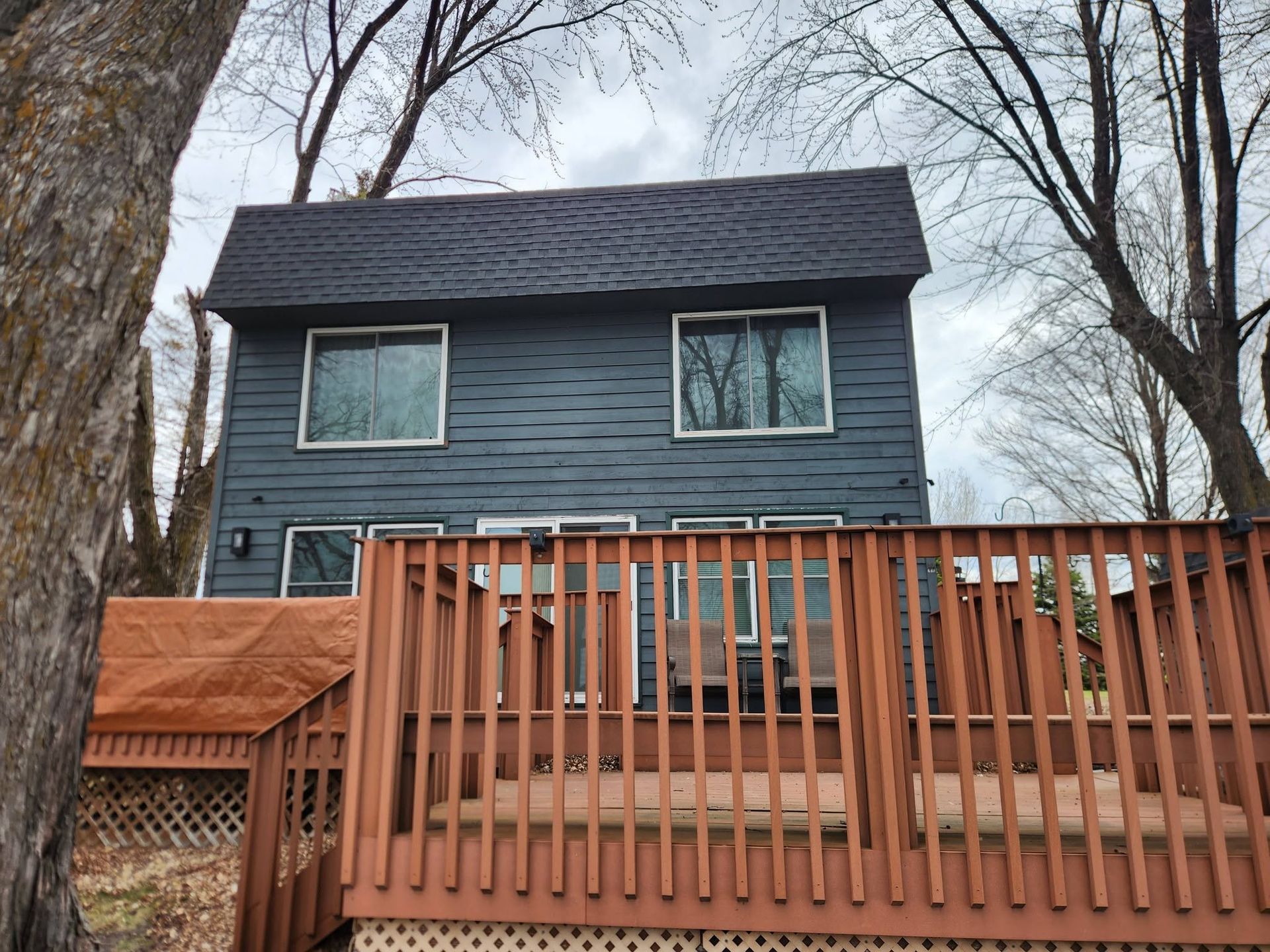
Why Deck Surfaces Demand More Prep
Horizontal deck boards face constant exposure to moisture, UV rays, and foot traffic, which means they need more prep attention than siding or vertical railings. Cleaning opens the surface and removes contaminants that prevent new coatings from bonding, while spot priming seals areas where moisture has already penetrated and ensures the topcoat adheres uniformly. Supreme Painting Pros has handled exterior surface prep across varied residential properties in McLeod County, approaching deck painting with the same care as house siding because the prep determines how long the finish holds.
After the deck is painted, you notice boards with consistent color and sheen, no peeling edges around knots or joints, and a surface that sheds water rather than allowing it to soak in and lift the coating. The finish looks clean and uniform, and the prep work underneath means it won't fail prematurely when summer humidity or winter freeze cycles return.
Deck painting is not the same as deck staining—paint sits on top of the wood and forms a protective barrier, while stain penetrates and requires a different prep approach. Painted decks need coatings that flex with wood movement and resist UV breakdown, which is why surface prep and primer selection matter as much as the topcoat itself.
Questions Before Starting Your Project
Homeowners preparing to paint their decks often ask about the process, timing, and what makes deck painting different from other exterior work.
Why do horizontal deck surfaces fail faster than railings or posts?
Horizontal boards collect standing water, take direct UV exposure, and experience more foot traffic than vertical components. Moisture penetrates the wood, UV rays break down the coating, and expansion from temperature swings causes paint to crack or peel, especially if the surface wasn't properly prepped before the last coat was applied.
What kind of cleaning is required before painting a deck?
Decks need to be power washed or scrubbed to remove dirt, mildew, and loose coating that would prevent new paint from bonding. Once cleaned, the surface must dry completely before priming or painting begins, or moisture trapped under the new coat will cause adhesion failure.
How do you prepare boards that are already showing paint failure?
Boards with peeling or cracked paint are scraped to remove loose coating, then sanded smooth if the wood beneath is rough or splintered. Bare or heavily weathered areas get spot-primed before the topcoat is applied, which ensures the finish bonds evenly and doesn't pull away from problem spots within the first season.
When is the best time to paint a deck in Hutchinson?
Late spring through early fall provides warm, dry conditions that allow paint to cure properly. Decks should be painted when temperatures are consistently above 50 degrees and no rain is forecast for at least 24 hours after the final coat is applied.
How long does deck paint last in Minnesota weather?
Properly prepped and painted deck surfaces typically last three to five years before needing a refresh, depending on sun exposure, foot traffic, and how well the wood was sealed before painting. Decks that skip cleaning or priming often show failure within one to two years.
Supreme Painting Pros has handled exterior painting and surface prep across Hutchinson and McLeod County since 2013, treating deck surfaces with the attention they need to hold up through Minnesota weather. Call (320) 296-2964 for an estimate based on your deck's current condition.