Patched Walls That Disappear Under Paint
Drywall Repair in Hutchinson for apartment turnover and older homes with nail pops and cracks
Apartment turnover and older McLeod County homes generate consistent drywall damage in the form of nail pops, cracks, and moisture staining that must be addressed before any paint coat goes on. A rushed patch telegraphs through any sheen level, but feathering compound edges wide enough to disappear under paint produces a surface that reads as smooth and uniform once the topcoat dries. Supreme Painting Pros handles the repair as part of a complete paint-ready surface, delivering a one-call solution for wall prep and finish rather than referring the work out or making excuses to skip prep.
The work involves filling damaged areas with joint compound, then feathering the edges outward in progressively thinner layers so the transition from patch to existing wall becomes invisible. This requires multiple coats with sanding between each layer, particularly on cracks that have opened wider than a hairline or nail pops that have pushed through the existing compound. Moisture stains are sealed with stain-blocking primer before patching to prevent bleed-through under the new paint.
Call to schedule a wall assessment before your next painting project.
How Drywall Repair Becomes Invisible
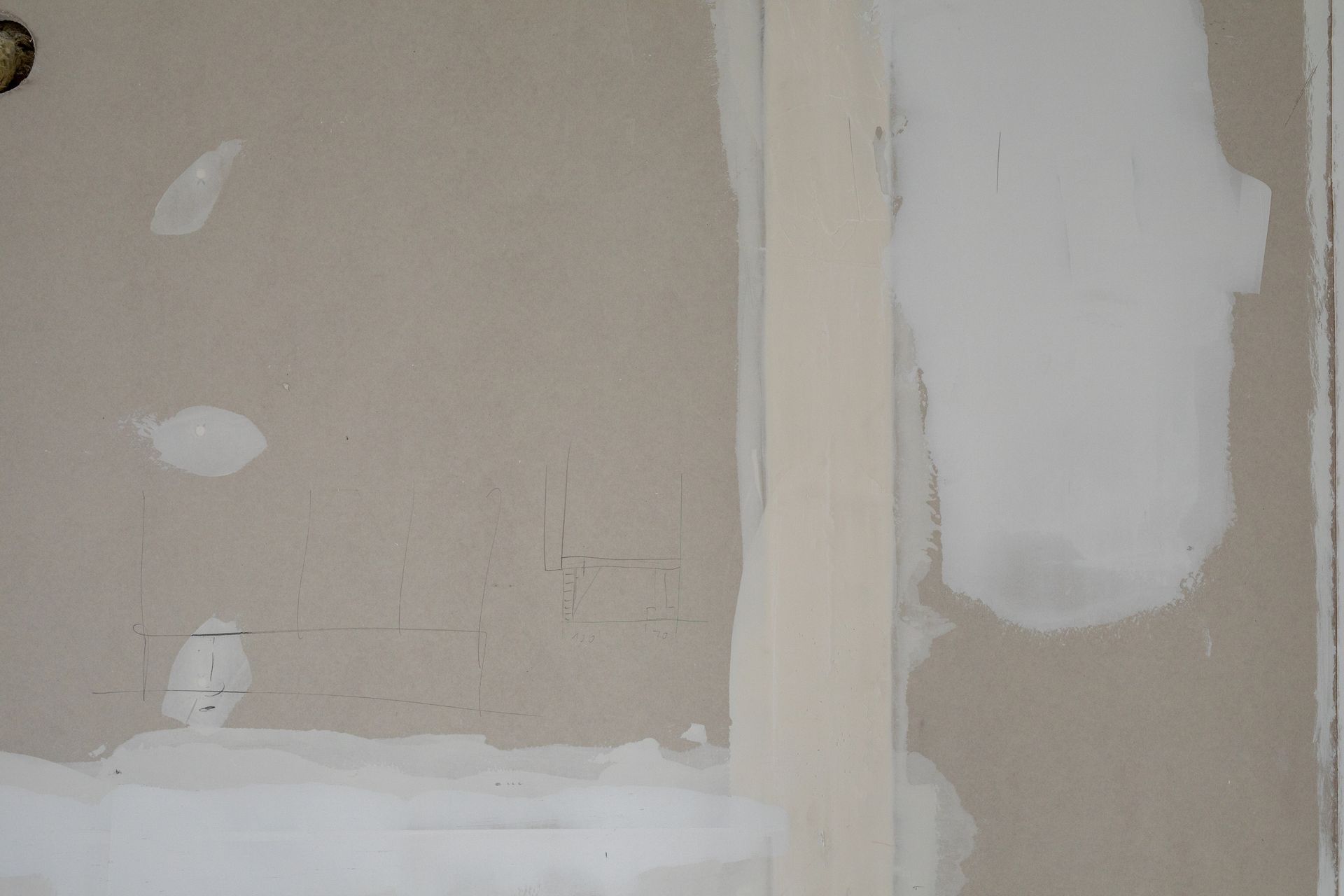
Joint compound shrinks as it dries, so patches applied in a single thick layer end up dished below the surrounding wall surface and show as shadows under the paint. Building the patch in thin coats with sanding between each layer allows the compound to cure without shrinking below grade, while feathering the edges six to eight inches beyond the damaged area blends the transition zone so it doesn't catch light as a visible hump. Nail pops are set below the surface and filled flush, then sanded smooth so the fastener doesn't push through again when the wall flexes.
After the repair is complete and painted, the wall surface reads as continuous and smooth without visible transitions or texture changes where the patch meets the original drywall. Cracks no longer show as dark lines, nail pops no longer appear as raised bumps, and moisture stains no longer bleed through the topcoat. You see a finished wall that looks like it was never damaged, not a painted-over compromise.
The service includes patching, sanding, and priming to create a paint-ready surface. It does not include replacing entire drywall panels or addressing structural issues causing repeated cracking, though those conditions are noted during the assessment if they need separate resolution. The cost depends on the number of repairs, the size of the damaged areas, and whether the work is part of a full repainting project or a standalone repair.
What Homeowners Want to Know About Wall Repair
Hutchinson homeowners preparing for interior painting or apartment owners managing unit turnover often ask about the difference between a quick patch and a proper repair, and whether drywall work requires a specialist or can be handled by the same crew doing the painting.
Why do some patched areas show through the paint even after multiple coats?
Patches that aren't feathered wide enough or sanded flush create edges that catch light and show as shadows or raised lines. Compound also continues shrinking after it appears dry, so single-coat patches often dish below the wall surface and remain visible regardless of how many paint coats go over them.
How many coats of joint compound are required to patch drywall correctly?
Most repairs need at least two coats, with sanding between each layer to remove tool marks and level the surface. Larger holes or deep cracks may require three coats to build up flush without leaving a dished center.
Can nail pops be fixed permanently or will they keep coming back?
Nail pops are caused by wood movement or fasteners that weren't set deep enough initially. Setting the fastener below the surface and filling flush stops the protrusion, but if the framing continues to move due to humidity changes, new pops can appear in different locations over time.
Do you need to prime patched areas before painting or can you paint directly over joint compound?
Joint compound is more porous than drywall paper and absorbs paint at a different rate, so unprimed patches show as dull spots under the topcoat even when the surface is level. Priming the repair before painting ensures uniform sheen and color across the entire wall.
Will moisture stains bleed through new paint if they're not sealed first?
Yes, water stains contain tannins and minerals that bleed through standard paint and primer. Stain-blocking primer seals the discoloration before patching so it doesn't reappear under the topcoat, which is critical for apartment units with previous leak damage.
Supreme Painting Pros is locally owned and operated in Hutchinson, serving McLeod County since 2013 with drywall repair built into painting projects rather than referred out. An active apartment complex contract has required consistent unit prep and repair before repainting, building the skill into every project. Call 320-296-2964 to discuss wall prep and painting for your property.